Voice-over and voice work
Voice-over and voice work recording
A dry, quiet booth, a microphone matched to the voice and a producer who knows your script as well as you do. Your words come out sounding the way they were written.
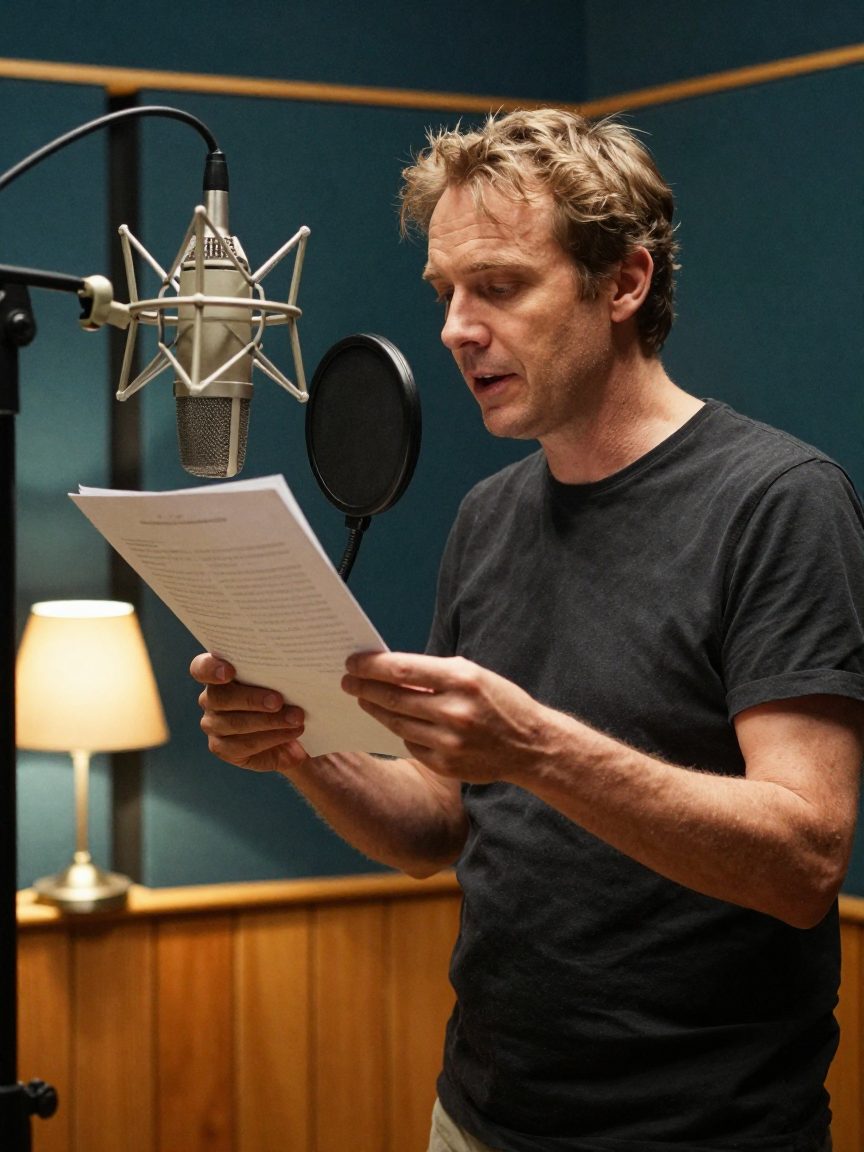
Voice-over lives or dies on clarity and tone. Listeners drift off at the first mumbled line, a roomy echo or a read that sounds slightly rushed. In our 9 m² booth we capture spoken word without room sound, so the recording sits cleanly under music, picture or animation later on. Sanne de Wit, our podcast and voice-over producer, runs the session and keeps an ear on pronunciation, pacing and inflection.
Our clients include agencies, production companies, training providers, business owners and voice actors who have landed their own job. Bring your own voice, a voice actor you have cast yourself, or just a script. Direction can happen right next to the booth in the control room, or a client can listen in live from another city or country and give notes while the talent stands at the microphone in Amsterdam.
How it works
Script and brief
Send the final script, target length, audience and, if you have one, a reference or a video cut with timecodes. We read it through and flag tricky names or overlong sentences before the day.
Match voice and microphone
From our 34 microphones we pick one that suits the voice, then set distance and level. A short test line tells us whether the sound fits your medium.
Directed recording
We record line by line or paragraph by paragraph, with alternative reads in tone and pace. The director sits in the control room or listens remotely and marks the preferred takes.
Edit and delivery
We edit the chosen takes, remove clicks and distracting breaths and deliver files in the format your editor or platform expects.
Who this session is for
Voice work takes many shapes. The jobs we see most often are:
- Commercials for radio, online video and social media, where every second counts and the copy has to land on a fixed length.
- E-learning and training videos, usually long scripts full of technical terms that need a calm, consistent read across dozens of modules.
- Corporate films and explainers voiced to picture.
- Phone menus and on-hold messages: short, but with strict demands on clarity.
- Audio guides and audiobook samples, where storytelling and breath control matter a lot.
You do not need to be a professional voice actor. Plenty of business owners voice their own videos, and we coach them on pace, emphasis and keeping the voice relaxed. Speakers must be at least 16 years old, or attend with a parent or guardian.
Directing in the room or remotely
The client does not have to be in Amsterdam. There are two ways to direct a session:
- In the control room
- You sit beside the engineer, see the talent through the glass and give notes straight away over talkback. This is the quickest route for short spots with many variations.
- Live and remote
- You listen in high quality from your own desk and talk to the talent and engineer as if you were in the room. We test the connection with you beforehand so the session does not open with technical fiddling.
Mixing both is fine too: an agency in the control room and the end client listening remotely. Mention it when you book and we will schedule a few extra minutes for the connection.
What to prepare
A good voice-over starts with a locked script. Every rewrite during the session costs time, and at an hourly rate time is money. Before you come in, check that:
- the script has been signed off by everyone who has a say in it;
- pronunciation of brand names, product names and acronyms is noted, phonetically or with an audio sample;
- the target length is known, ideally with a video cut the talent can read along to;
- the tone is clear: businesslike, warm, upbeat or understated.
Voice actors should bring a bottle of water, wear clothes that do not rustle and skip dairy and fizzy drinks just before the session. Our guide on preparing a vocal session has more practical tips, and much of it applies to spoken word as well.
Sound, booth and equipment
Spoken word often stands completely alone, with no music to hide small flaws. That is why we pay extra attention to silence and dryness. The booth is acoustically treated so hardly any reflections reach the recording; the voice sounds close and neutral, which leaves the editor free to add space later if needed.
For voice work we usually choose a large-diaphragm condenser or a shotgun-style microphone, depending on the voice and the medium. We record at 48 kHz and 24 bit, the video standard, and can convert afterwards for radio or telephony. During the take we watch more than levels: mouth noise and plosives get caught early, so there is little to repair in the edit.
What you receive and in which formats
After the session you get a folder of clearly named files, split per line, per paragraph or as one continuous read, whatever suits your workflow.
| Use | Format | Note |
|---|---|---|
| Video and film | WAV, 48 kHz / 24 bit | Dry, no effects |
| E-learning | WAV or MP3 per module | File names follow your list |
| Radio and online ads | WAV, cut to the required length | Light processing on request |
| Telephony | Format of your phone system | Tell us the system type in advance |
Short jobs often leave the studio the same day. For long e-learning projects the edit arrives within 7 working days. We keep the raw recordings for 6 months so a later pickup can match the same voice.
Corrections and pickups
Spotted a typo in the script after delivery, or does the client want one line read differently? The price covers 2 rounds of corrections on the edit: swapping takes, lengthening pauses or tightening a sentence. If new copy has to be recorded, we book a short pickup session at the hourly rate. Because we log microphone position and settings, the new lines blend in with the original recording.
Pricing and what is not included
There are two ways to pay. The hourly rate of €110 works well for long scripts, e-learning and sessions with many alternative reads. A single spot of up to one minute costs €195, covering recording, direction in the room or remotely and an edit of the chosen take. All amounts include 21% Dutch VAT; business clients see the amounts excluding VAT on their invoice.
Not included:
- fees and usage rights for a voice actor, whether booked through us or by you;
- writing or translating the script;
- music, sound design and the final mix to picture (mixing is available separately, see mixing);
- broadcast rights agreements with stations or platforms.
We ask for a 30% deposit when you book. You can cancel free of charge up to 3 days before the session; after that we charge 50%. The full arrangements are in our terms and conditions.
Rights to the recording
The recording is yours once the invoice is paid. What you may do with it depends on your agreement with the voice. If you work with a professional voice actor, settle beforehand which media, which period and which territory the recording will be used for. We are not a party to that agreement, but we are happy to talk through what you need to arrange. How we handle speakers' personal data is explained in our privacy policy.
What you get
- Booth and control room for the full booked time
- Producer reading along for pronunciation, pace and tone
- Choice of studio microphones, matched to the voice
- Live remote direction with a connection tested in advance
- Edit of the chosen takes, cleaned of clicks and distracting breaths
- Delivery in the format of your editor, platform or phone system
- Correction rounds on the edit as set out in the terms
Frequently asked questions
How long does an e-learning script take to record?
As a rule of thumb, a trained voice records ten to fifteen minutes of finished audio per studio hour, depending on jargon and the number of alternative reads. Send us the script and we will give you an estimate.
Can you find a voice actor for me?
We can put you in touch with voices who have worked with us before. You agree fees and usage rights directly with the talent; they are separate from our studio rate.
I want to direct remotely. What do I need?
A stable internet connection, good headphones and a quiet spot. We send a link in advance and check together that you can hear us clearly.
Does a 30-second spot count as a full spot?
Yes. The spot price applies to any spot up to one minute. If you need several versions of the same copy, such as a short and a long cut, the hourly rate is often better value.
How do I book a voice-over session?
Use the form on the contact page, call us on 020 846 3172 or email [email protected]. We reply within 2 working days.
More services
- Vocal and instrument recordingRecording vocals or a single instrument in our isolated booth, engineer included.€85per hour
- Live band recordingTracking your whole band at once in the live room, every instrument on its own track.€420per half day (4 hours)
- Podcast recordingRecording conversations with up to four speakers, basic edit included.€145per episode (up to 90 minutes)
- MixingYour recorded tracks balanced into a finished stereo mix.€290per track
- MasteringFinal processing of your mix for streaming, vinyl or CD at the right loudness.€70per track
Recording in Amsterdam soon?
Tell us what you want to capture
Send a short description and a few possible dates. Within 2 working days you get a proposed slot and a written quote.