What loudness actually means
A peak meter shows how high the highest point of your signal reaches. That says little about how loud a song sounds. For that there is LUFS, a unit that measures how loud our hearing perceives a song across its full length. The closer to zero, the louder.
We also watch true peak, measured in dBTP. It catches peaks that only appear during digital-to-analogue conversion or when the file is encoded for streaming. A master that stays neatly below zero on a sample meter can still distort after encoding if its true peak is too high.
Normalisation on streaming platforms
The major streaming services play tracks back at a similar level by default. A master much louder than their reference gets turned down on playback. So you gain nothing in volume, but you do lose dynamics: the snap of the snare, the space between instruments.
| Platform | Approximately |
|---|---|
| Spotify, YouTube, Tidal | around −14 LUFS |
| Apple Music | around −16 LUFS |
| Radio and TV under EBU R128 | −23 LUFS |
That does not mean every master has to sit at exactly −14. It is a reference point, not a target.
How loud do we master?
We choose loudness per song and per genre. An acoustic singer-songwriter track gets more breathing room than a techno track that has to hold its own next to other records in an Amsterdam club. Most releases land somewhere between roughly −14 and −9 LUFS, with true peak no higher than −1 dBTP.
Femke Bakker talks it through with you beforehand. If you want the track loud and dense, we can do that, but we let you hear first what it costs in dynamics.
Vinyl and CD play by other rules
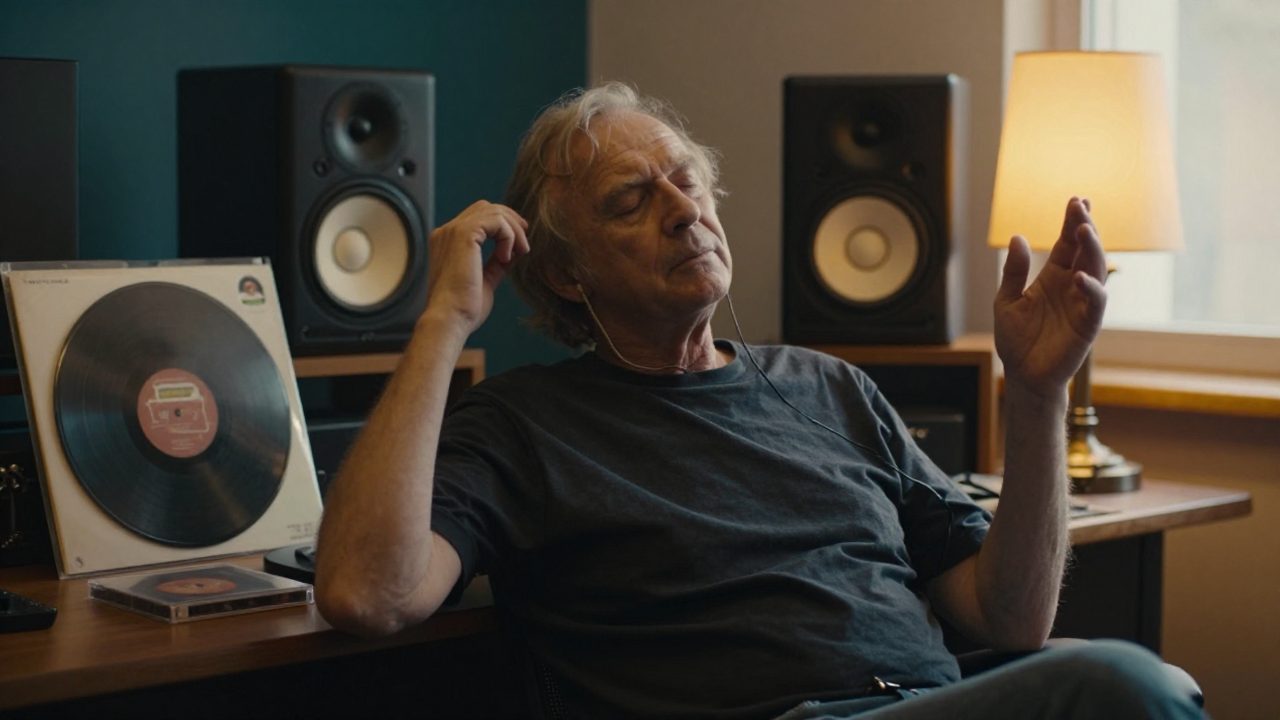
Vinyl has physical limits. Too much stereo low end, harsh sibilance or an extremely loud master can cause trouble when cutting or playing back. That is why we often make a separate, slightly more dynamic master for vinyl. Check with your pressing plant too about side length and file requirements.
For CD we deliver a 16-bit, 44.1 kHz file with the right gaps between tracks and ISRC codes if you need them. As an independent artist you request those codes from the issuing body in the Netherlands or through your distributor.
Getting your mix ready for mastering
- Take the limiter off your mix bus, or send one version with and one without.
- Leave around 3 to 6 dB of headroom below zero on the peaks.
- Deliver a 24-bit or 32-bit float WAV at the original sample rate.
- Do not trim too tightly: leave a little silence before and after.
- Add a reference track and note where the master will be released.
Coming from another studio? Read delivering tracks for mixing too; the same format rules apply.
Treating an album as a whole
On an album or EP, how the songs sit together matters as much as the loudness of any single track. A ballad can be quieter than the single before it, as long as the transition feels natural. That is why we prefer to master an album in one go. An album of up to twelve tracks costs €540; a single track is €70, both including 21% VAT.
Delivery and revisions
You receive your master about 7 days after we get your mix. That includes a streaming version and, on request, separate versions for CD or vinyl. You then have 2 revision rounds. Listen in different places: headphones, car stereo, laptop speakers. A master should hold up everywhere, not just in the studio.
We keep your files for 6 months, so you can order an alternative version later.
Booking your master
Everything about our mastering service is on the mastering page. Want it mixed first? See mixing. Not sure which loudness suits your release? Send your mix and a reference and we will think it through with you. Get in touch, email [email protected] or call 020 846 3172.